
Atlanta Resident Record Coverage
A sound resident lookup uses the official record that fits the question. The Fulton assessor can associate an owner with a parcel, but it cannot identify every person who occupies the site. A deed fixes a named party to a recorded transfer. Court dockets show parties and case events where the file is public. Vital records establish life events, though modern certificates have strict eligibility rules. Dates matter because an accurate old record may no longer describe a current address or status.
| Record | What it confirms | Where | Access |
|---|---|---|---|
| Property | Owner, situs, mailing address, parcel | Fulton or DeKalb assessor | Free web search or counter |
| Deed | Parties, recording date, legal description | Clerk and GSCCCA | Index, images, deed room |
| Voter | Registration residence, status, districts | Georgia SOS | Self-lookup or statutory list |
| Court | Party role, case number, public events | Local or federal court | Provider, clerk, terminal |
| Vital/probate | Life event or estate evidence | DPH and courts | Order, mail, registered access, counter |
| Business/license | Filed role, service address, credential | Georgia SOS | Free index; documents may cost |
Begin with the narrowest dependable fact. An address points to a parcel. A case number points to one docket. A license number separates similarly named professionals. If only a name is known, search spelling variants and middle initials, then require at least two other matching facts. This table is a route map, not permission to combine unrelated people.
Confirming Atlanta Same-Name Matches
Common names are the main risk in an Atlanta resident lookup. Search results from separate sites may repeat one old source. A cluster of pages is not independent proof. Strong matches intersect a dated address, spouse or associate, occupation or business, and a stable identifier such as a parcel, deed book and page, case number, or license number.
Keep each result in its own time frame. A tax mailing address may belong to an estate, company, attorney, or post office box. A business address may be a registered office rather than a home. Even a correct voter record is a dated statement of registration residence. When facts conflict, ask the custodian to check the identifier. Clerks will not conduct open-ended research.
- Write the full name, initials, variants, and known date range.
- Anchor the name to a Fulton or DeKalb parcel when an address is known.
- Compare a deed, public filing, or credential using its unique number.
- Reject a match when dates, county, role, or address do not align.
- Save the date and custodian so the result can be checked again.
Note: A name is a lead; a matching date, place, role, and official identifier form a far stronger identity chain.
Looking Up Atlanta Court Parties
Atlanta court records are split by jurisdiction. Fulton Superior Court handles general civil cases, felonies, divorce, title, and equity. State, Magistrate, Probate, Juvenile, and Atlanta Municipal courts keep other files. Federal matters may appear in the Northern District of Georgia. An eastern Atlanta address can lead to DeKalb courts. The Georgia Courts e-access directory identifies providers, but it is not one complete statewide index and an account is required.
| Field | How to use it |
|---|---|
| Court/county | Select Fulton or DeKalb and the right court. |
| Party name | Try variants; search entities separately. |
| Case number | Use the exact number when known. |
| Category | Narrow the case class. |
| Filed dates | Separate common names. |
A public docket may show caption, case number, court, category, filing date, status, judge, parties and roles, attorneys, events, hearings, disposition, and images where enabled. Sealed, juvenile, adoption, confidential guardianship, and restricted records are excluded. The Atlanta Municipal Court resources provide document and transcript request forms.
The captured Municipal Court request page shows the fallback when a name search is not available.
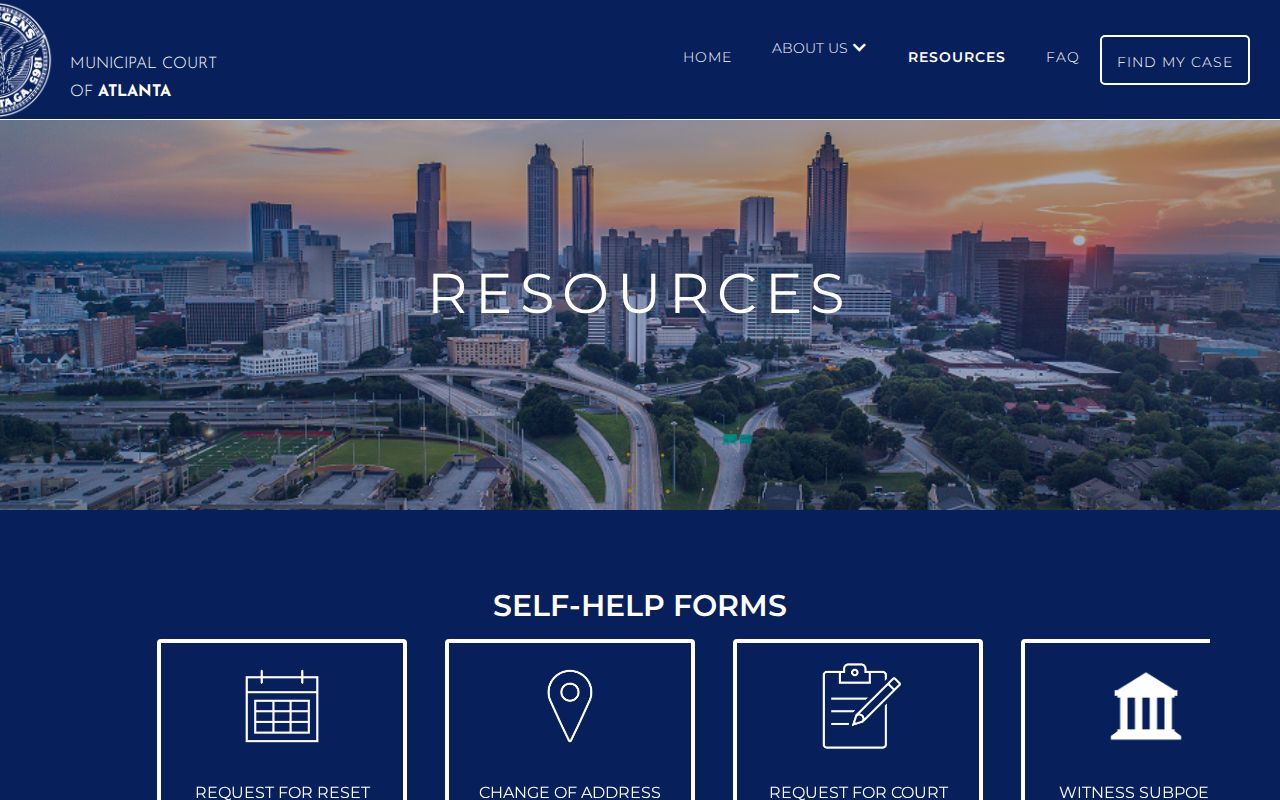
Use the screen to reach the clerk, then inspect the underlying filing instead of relying only on an index.
Atlanta Voter Lookup Boundaries
Georgia My Voter Page is a self-lookup, not a browser for Atlanta residents. It requires first initial, last name, county, and date of birth. A match can display status, registered residence, precinct, polling place, elected districts, sample ballot, absentee status when applicable, and participation history. Participation never reveals vote choices. Georgia also registers no party affiliation.
Public voter lists are a separate product under O.C.G.A. §§ 21-2-225 and 21-2-234. Social Security, driver or ID number, month and day of birth, email, phone, and other protected fields stay confidential. Eligible products come through the Secretary of State purchase process, not by scraping My Voter Page. Fulton Registration and Elections is the local correction channel. Inactive status does not prove a move because an inactive voter remains eligible.
Atlanta Vital Records Verification
Vital records prove a life event, not an open roll. The Georgia Department of Public Health issues Georgia births and deaths from January 1919 through online, mail, and local-office channels. The state office is at 1680 Phoenix Boulevard, Suite 100, Atlanta, open 9 a.m. to 4 p.m. weekdays except holidays. Fulton Probate Court supplies marriage records, Fulton Superior Court supplies divorce decrees, and DPH supplies verification rather than the signed decree.
Birth certificates are restricted under O.C.G.A. Title 31, chapter 10 and Rule 511-1-3-.33. Authorized applicants need a signed form, identification, and current fee. Death access depends on applicant, with tighter limits for cause of death. Birth records transfer to archives after 100 years and death records after 75 years under § 31-10-25. Historic searches can use Georgia Archives, indexes, newspapers, cemeteries, and churches.
- Docket
- The dated list of events and filings in a court case.
- Index and image
- An index locates a record; an image reproduces the filed document.
- Certified copy
- A copy formally authenticated by the custodian.
- Disposition
- The recorded case outcome where public.
Finding Atlanta Heirs Through Probate
Probate, deeds, and obituaries form a useful official trail to heirs. Search the decedent and county, then look for an estate number, petitioner, will, and public filings naming heirs. Fulton Probate Court Records Division offers registered re:SearchGA access, mail copies, and counter help. Guardianships remain confidential.
Compare an estate deed, notice, or obituary with the same dates and family names. A deed from an estate can link probate to a parcel. An obituary is a lead until a probate, vital, deed, or census record supports it. Georgia's authorized Adoption Reunion Registry process is the lawful route for birth-parent searches. Never attempt to bypass sealed adoption files.
Practical rule. Ask for an existing estate by name or number, then follow its citations instead of requesting a custom family tree.
Confirming Atlanta Business Affiliations
The Georgia Corporations Division search can link a name with an entity, registered agent, principal office, formation date, status, and filing history. Search people and entities separately. Annual registrations show changes. Fulton trade-name filings add DBA evidence, while UCC records index debtors, secured parties, numbers, and dates. These confirm filed roles, not homes.
The professional license search accepts board, license type, name, license number, city, and state. Results can show status, issue and expiration, and public discipline links. A credential number is far better than a name alone for separating Atlanta residents. City permits may add an applicant tied to a site, but each program has separate limits.
Checking Federal Atlanta Records
Federal civil, criminal, and bankruptcy indexes for the Northern District of Georgia use PACER. An account is required, and current fees should be checked. Courthouse terminals and the clerk are in-person alternatives. Federal records do not replace Fulton or DeKalb files, so choose by jurisdiction.
The successful PACER capture identifies the federal case gateway used in this part of a resident lookup.
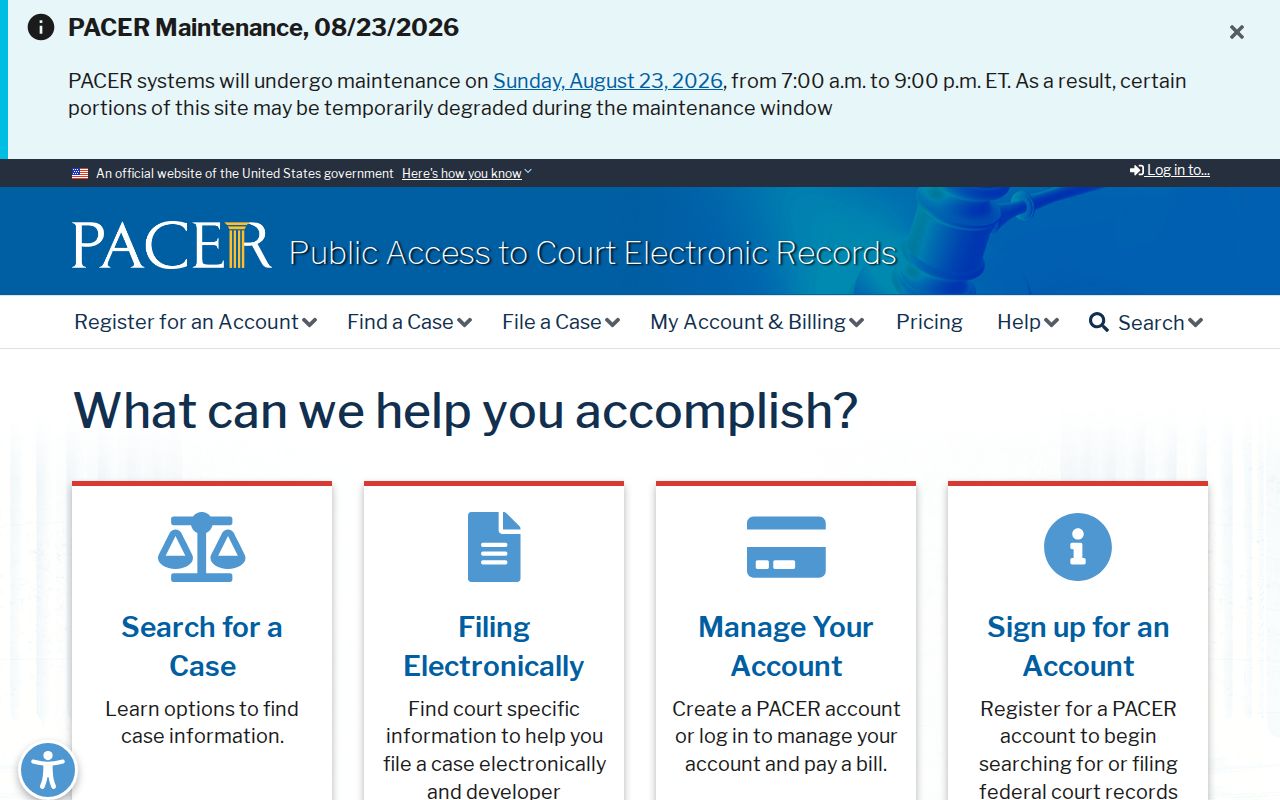
Use the result as a locator, then inspect the docket and filing before treating a name as verified.
Atlanta Lookup Request Fallbacks
When no online index answers the question, use other channels. Clerks offer copy requests and terminals. Probate accepts registered search, mail, and counter requests. DPH takes online, mail, and local-office orders from eligible applicants. Assessors and deed rooms have counters. Older evidence may require a library reading room or Archives finding aid.
For an existing record outside a portal, make a narrow Georgia Open Records Act request under O.C.G.A. §§ 50-18-70 through 50-18-77. State the department, record, person or address, date range, and format. The office normally answers in three business days with records, exemptions, or a timetable and estimate. The Fulton portal supports submission, tracking, messages, and downloads. An agency need not create a new report.
Lawful Atlanta Resident Lookup Limits
Some accurate searches end without an address. Georgia's Safe at Home gives eligible survivors a substitute address and protects the actual location. Vital certificates, voter fields, juvenile files, sealed matters, adoptions, guardianships, and motor-vehicle data have separate protections. Never infer or republish a hidden address.
If an official source is wrong, contact its custodian and cite the parcel, case, instrument, license, or certificate number. Commercial compilations can merge names and retain stale data, so treat the category only as an unverified lead. Each service has its own privacy channel.
Lawful use. Use an Atlanta resident lookup only for lawful personal research. Georgia law can punish stalking, threats, surveillance, and repeated harassment.