
Atlanta Neighbors in Public Records
Official sources answer different questions about one Atlanta block. GIS shows parcel shapes and nearby lots. The tax roll names assessed owners. A lawfully obtained voter list can supply a dated registration address, while an NPU directory points to public civic contacts rather than private households. Treat each output according to what its custodian actually records.
| Source | What It Shows About a Block | Access |
|---|---|---|
| Atlanta Property Information | Selected parcels, owners, addresses, parcel IDs | Free map and export |
| Fulton assessor | Current assessed owner, situs, mailing address, parcel facts | Free property search |
| Georgia public voter list | Released voter names and registration addresses | Separate SOS purchase channel |
| Atlanta NPU directory | Meeting details, civic officers, organization contacts | Free public directory |
| Haines criss-cross | Historic listed occupants found by address or phone | Library walk-in, 1946-2016/17 |
An owner name is not the same as an occupant name. A mailing address may belong to an estate, company, or another residence. Renters and other household members commonly do not appear on the parcel card. For Atlanta neighbors, use owner data as ownership evidence and label every voter or directory result with its date. The map is best for defining the search area, not for claiming who lives behind each door.
Buffer an Atlanta Block
Atlanta's GIS application catalog describes a Property Information tool that can select a point or area, apply a buffer, and export owners, addresses, and parcel numbers. A buffer is a measured zone around the selected point or shape. This is the closest official tool to a block-level neighbor search because it creates a defined group of nearby parcels.
Search the exact number, road name, suffix, and quadrant. Select the subject parcel, zoom until parcel lines and street labels are clear, then draw the area or use a small buffer. Export the list and retain the parcel IDs. The Planning Viewer can also measure distance, while Fulton GIS adds layers for tax parcels, ZIPs, subdivisions, school zones, census boundaries, flood areas, and planning districts.
Note: Date every Atlanta GIS export because owners, parcel boundaries, and map layers can change after a sale, split, consolidation, or update.
Map Atlanta Neighbors by Parcel
Use the map to build a reproducible parcel set, then use the assessor to verify it. This keeps spatial context separate from the official assessment roll. A parcel is one mapped unit of land with its own identifier. Its situs address is the location of the land, while its mailing address is where the owner receives tax mail.
- Resolve whether the full Atlanta address lies in Fulton or DeKalb County and inside city limits.
- Locate the parcel in Atlanta Property Information, then record its parcel ID, address, owner, and NPU.
- Click each adjoining parcel or export a small buffered area. Keep only the lots that fit the intended block.
- Verify each exported parcel in the correct county assessor search and note the record date.
- Label mailing-address matches or exemption clues cautiously. Neither proves a complete current household.
A corner parcel, condominium, or large complex may distort a simple radius. Adjust the shape to the actual street layout and inspect unit parcel IDs when relevant. For a whole named road instead of the immediate block, use the Atlanta street directory workflow.
Confirm Atlanta Neighbor Owners
The Fulton County assessor search supports owner, address, parcel ID, and map routes. A parcel card commonly includes the owner, mailing and property addresses, land lot, legal description, assessed values, sales history, building details, and exemption indicators. Save the parcel ID and tax year with each name.
GIS is contextual, while the assessor is the current tax-ownership authority. Even then, the owner may be a business or estate, the mailing address may differ from the property, and a recent deed may not yet appear in every system. Verify a material ownership claim against the recorded deed. Do not turn an ownership list into claims about all Atlanta neighbors who occupy the block.
Atlanta's NPU Neighbor Layer
Atlanta groups more than 240 named neighborhoods into 25 Neighborhood Planning Units. The city created the NPU system in 1974 under Mayor Maynard Jackson. Its directories offer a civic view of the block: the NPU assignment, meeting details, chair and planner contacts, and links to named neighborhood organizations.
The Atlanta NPU and neighborhood contacts directory is the right source for public group contacts. It is not a private membership roster. For example, the city's NPU-A materials identify groups such as Chastain Park Civic Association, Margaret Mitchell Civic Association, Paces Civic Association, and Tuxedo Park Civic Association. Membership and access rules vary by organization.
City Planning NPU Directory
Use the city list for NPU meetings, public officers, planners, and neighborhood-organization links.
Neighborhood Organization
Use the named group's published contact route. Do not assume it releases private member details.
Atlanta Neighbors on Voter Lists
Georgia's My Voter Page is a self-lookup, not a street browser. It requires a first initial, last name, county, and date of birth. Georgia's public voter list is a different statutory product available through the Secretary of State purchase channel. Under O.C.G.A. sections 21-2-225 and 21-2-234, names and addresses can be public, while Social Security numbers, driver or ID numbers, month and day of birth, email addresses, phone numbers, and other protected data stay confidential.
A lawfully obtained file can support a dated block count or corroborate a known registration residence. It cannot reveal ballot choices. Georgia does not register voters by party, and participation history only records which elections a voter took part in. An inactive status also does not prove that a person moved.
Historic Atlanta Neighbors in Haines
Central Library Special Collections holds Haines criss-cross directories from 1946 through 2016/17. These volumes reverse the usual name search: start with a street address or phone number and retrieve the listed name. Reading several consecutive addresses can reconstruct a dated view of a block that a parcel map cannot supply.
Compare adjacent years because a publisher could miss a household or print old data. Preserve the exact quadrant and street suffix. If an address disappears in older work, the Georgia Archives' 1926 Atlanta house-numbering maps may reveal a number change. These sources describe a past block, not the current Atlanta neighbors.
Official Atlanta Rolls Beat Guesswork
Commercial neighbor tools often combine property, voter, and marketing data without making each source date clear. Official records are narrower but easier to audit. They let a reader distinguish a parcel owner from a registered voter, civic contact, or historic directory occupant.
| Source Type | Strength | Limit |
|---|---|---|
| Official GIS and assessor | Parcel geometry and dated assessed ownership | No full occupant list |
| Official voter data | Dated registration residence when lawfully released | Protected fields removed; not a live household roll |
| Commercial compilation | May suggest names to check | Source, date, and occupancy claims may be unclear |
Confirm any useful lead with the custodian that created the record. If an official map and a compilation disagree, keep the discrepancy visible until a deed or current assessor record resolves it.
Atlanta Block Safety Sources
Some searches are about personal safety rather than household identity. The Georgia Bureau of Investigation registry and the Georgia corrections offender query is the official source for its covered records and carries its own statutory warnings. The image below shows that official service route.
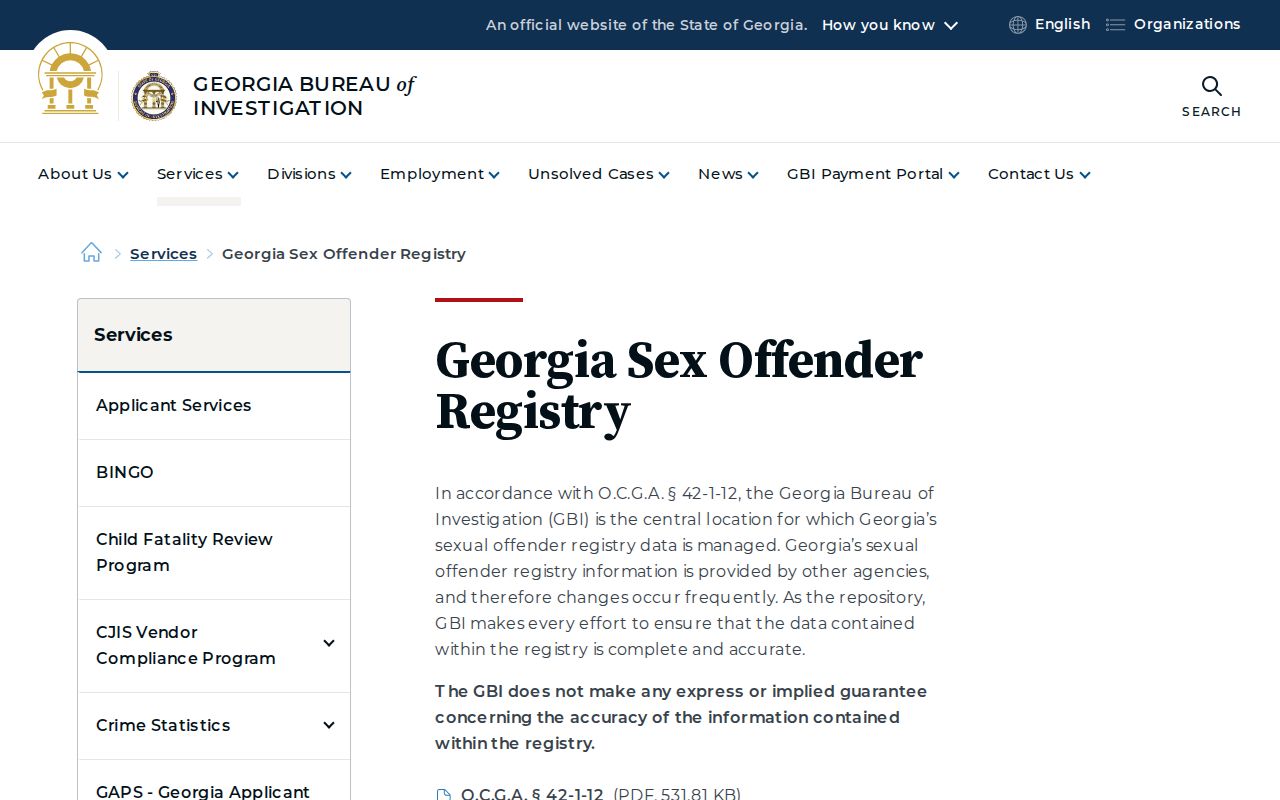
Registry data has a defined legal scope and should not be stretched into claims about unrelated Atlanta neighbors. Never use it to threaten, target, or harass anyone. For a correction or fuller context, follow the agency's official process rather than copying a third-party summary.
The Fulton County Sheriff's inmate information page is the official route for a current jail-status inquiry tied to a known person.
A jail listing is a custody snapshot, not proof of guilt and not a directory of Atlanta neighbors. Check the named court for the case record and disposition.
The broader Georgia Bureau of Investigation services page identifies official state services and correction routes.
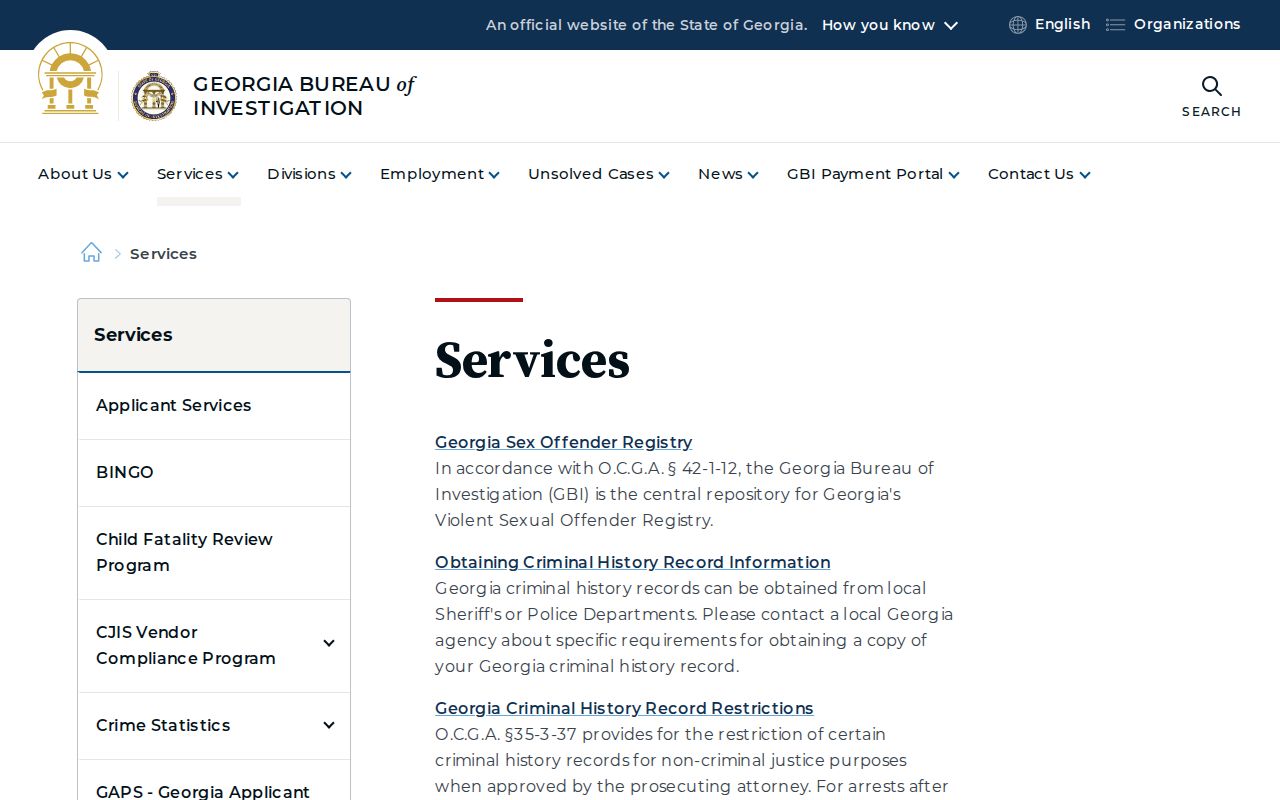
Use the agency responsible for the specific record. Do not merge registry, criminal-history, and custody data into one claim about a person or block.
Privacy Around Atlanta Neighbors
There is no official complete roster of everyone living on an Atlanta block. Utility and delivery customer lists are not substitutes. DMV addresses are protected, and parcel records omit renters and many household members. Georgia's Safe at Home program can substitute an address for eligible survivors across participating public records. Confidential voter fields remain shielded as well.
Absence from a map, directory, or voter file is not proof that a person is absent. Conversely, an old directory or registration address does not prove current residence. Make contact only through lawful, respectful means and honor a person's choice not to respond.
Lawful use. Look up Atlanta neighbors for civic contact, a reunion, or personal safety awareness. Never use records to watch, intimidate, harass, or harm anyone.